Monday, February 24, 2014

Hard Facts of Life: Aging Horses...


   Thing about gettin' old and gray...  You might not get that much wiser, but you do get some perspective.  Especially when it comes to the lives of horses.  Some things that many horseowners today don't seem to realize, and need to come to grips with.

   Horses don't live forever.  Yes, they last a good bit longer than most house pets.  Improvements in horsekeeping and farriery have extended the useful careers of modern steeds.  But, sadly, they still get old on us.  Maybe not so obvious to the Hunter Girl whose equestrian career is limited to the few years between adolescence and going off to college.  But to those of us who've pulled foals into the world, then buried them at the inevitable conclusion of Old Age, the fleeting nature of the equine lifespan is all too apparent. 
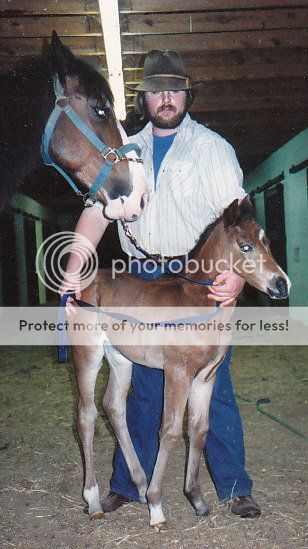

She lived long enough to see the beard go white, and then some.
But the filly got her place under the hill a couple weeks ago.

   Too often owners are in denial about their aging horses.  The geriatric years can slip-up on us.  We look-up and realize that ol' Dobbin isn't up to the kind of use we need from a horse anymore.

   The worst and, unfortunately, probably most common response to this is to try and find the old horse a new home...  Craig's List and other sites are full of old and unsound critters being sold or given-away as "companion" or "light riding only" horses.

   This is irresponsible, and far from a kindness to the old horse.  At best, the folks willing to take the geriatric equine in probably don't know what they're getting into.  They're going to be dealing with an animal whose needs are constantly increasing, while his usefulness decreases.  And, kind hearted as they might be, they don't have a personal debt to the horse.  They didn't get years of faithful service out of him like his prime-of-life owner did.  The horse either winds-up back on Craig's List, or effectively abandoned somewhere to die of slow neglect.

   It's understandable, especially in the current economy, that people might not be able to provide cushy, long retirements for their horses.  (Yeah... We tend to do it here at Prophet's Thumb. But we're not paying board and such on each horse.  And we're just too damned sentimental.)

My faithful stallion, and personal mount for over a quarter century.
Sire of the filly pictured above.  In his last year of retirement.

   If you can't take proper care of your retired horses, perhaps you should heed the Horse's Prayer...

When my useful strength is gone, do not turn me out to starve or freeze,
 or sell me to some cruel owner to be slowly tortured or starved to death;
 but do thou, my Master, take my life in the kindest way...

   Yeah... There are few things harder on a horseman's heart than putting a horse down.  But two of them might be seeing an old horse nobody cares for anymore, or a good young horse going to waste because a decrepit pensioner is filling his 'slot' on a farm somewhere.

   Which brings us to the corollary...  Old horses eventually need to be replaced with new ones.  This is a particular problem in the equestrian world because there is so much lead-time in horse production.  You can't just whip-up a well-broke five year-old overnight like some consumer product.  It takes years of continuous input to get from a sparkle in the old stud's eye to a solid horse who can really earn his oats.  So it's a process that really needs to begin well BEFORE ol' Dobbin needs to retire.  But this requires horseowners to face the mortality of their beloved mounts, which may not be an easy thing to do.

Just to close on a brighter note,
Here are the stallion and his daughter,
back when their final days were still
far beyond the horizon.


- 30 - 

,,,

.


Friday, November 29, 2013

Millwater Publishing: 'Tis the Season...


   Hope you all had a fine Thanksgiving!  Now that it's Black Friday, let's see what kind of holiday specials we've got going on...

   You can order Millwater's FARRIERY trade paperback directly at this link, and enter the code: YPLFZ3CT for a 25% discount.

   Amazon has the trade paperback at 10% off.  Even lower through some of their independent resellers.

   Promotional copies of both the trade paperback and deluxe hardcover are usually available on eBay at a great deal.


- 30 -

.

. . .


Sunday, April 21, 2013

Millwater's Farriery: There's More Horse Above Knee-Level...

.

   I've commented before about how many farriers these days are somewhat over-focused on hooves and forgework at the expense of appreciating the whole horse.  Part of that no-doubt stems from the rise of professionalism and its accompanying specialization in the '90s.  (Before that it was pretty-much expected that farriers would float teeth, break horses, etc. in some areas.)

   The general impression I get from farriers in recent years (and feel free to correct me if I'm mistaken) is that many have very little to do with horses aside from working under them.  I was in that mode myself for quite a while...

   Now, despite the fact that my best-laid schemes gang aft agley, we're trying to get back into horse production here at Prophet's Thumb.

   Note that I said "horse production"... Not just "foal production". 

   With all the talk about overbreeding and the horse market being so bad, you might wonder why on Earth anyone would get back into breeding horses at this point.

   Well, from what I've observed, there aren't so much too MANY horses, as too many of the WRONG horses. 

   I've been watching the market pretty close lately, even did a bit of horse shopping myself.  And it seems that there are good reasons why some folks can't sell their horses, and it's not just that the market is in the tank...

   Size Matters:  It's true that I've long bemoaned the harm done to breeds like the American Quarter Horse by people breeding for height above what is normal for the type.  But that doesn't mean you're going to be able to sell scrawny little ponies.  Many ladies like to visualize themselves as elite equestrians riding into international competitions on a majestic warmblood.  Men may still like to see themselves as Six Gun Heroes riding tall in the saddle upon a fiery steed.  Pretty much nobody wants to be the fat comic-relief sidekick bringing-up the rear on a tiny burro.


   Versatility Pays:  So many horses out there are bred for trick gaits, 'special' coat colors/patterns, and other characteristics that actually appeal only to narrow segments of the horse world.  The Paso enthusiast may think a fino-fino horse is the most awesome thing around, but 95% of the horse folk out there just see a high-priced, psychotic pony who doesn't do anything remotely useful.

   'Prime of Life' is More Than an Expression:  Nobody is in enough of a hurry to expand their equine graveyard that they're going out of their to buy horses who are quickly approaching the final slide.  Yes, there are a lot of impressively healthy older horses out there... But they're still older horses.

   At the opposite extreme are babies...  Buyers who aren't competent horse trainers willing to make the investment of time and effort in youngsters, and don't already have something else to ride or drive in the mean-time, are wise to avoid these 'prospects'.

   Dollars May Not Be Sound Anymore, But Folks Still Don't Want to Spend Them On Unsound Horses:   So many horses out there are advertised with use limitations, known issues, or just untested soundness.  Seriously?  Why would anyone pay to take-on someone else's problems like that?

   Failure To Launch:  The purpose of a horse is to be ridden and/or driven.  For them to serve that purpose they have to be properly trained.  Seems like an awful lot of people have forgotten this.  I remember when we assumed any unbroken five year-old must be some kind of hell-spawned widow-making bronc.  Now we see middle-aged horses advertised as "green" or just "started under saddle" all the time.  People buy mature horses so they can ride 'em NOW.  If they're going to deal with a green horse, they'd may as well get a youngster who hasn't already missed half its career.


   There is always a market for decent-sized, adaptable, prime-aged, sound and healthy, well-broke horses.

   That's why I said we're getting back into HORSE production, rather than FOAL production.  The horse world doesn't need more foals growing-up to be pasture ornaments.  We're breeding the kind of stock that should be in demand regardless of which direction equestrian styles go, and plan to keep them here until they're three years old, so that they'll graduate fully broke to drive and ride, ready to begin a useful life.

   Which means that, with luck, the new stud's just-completed season will produce the PT Graduating Class of 2017. 

   It's good to be back in the saddle again...


- 30 -

- - -

.


Saturday, February 23, 2013

Millwater's Farriery: Barefoot Movement Revisited...

.

   Scuttlebutt over on the Facebook is that a horse magazine article has the whole Barefoot Horse cult back in the spotlight.  Of course, we'be been around this track a whole lot of laps over the years, so I'll just give us a quick round-up...


On this very blog-

A refutation of the BAU-definition of the "traditional farrier trim" and the whole notion that the "barefoot experts" can accomplish some magic via horn removal that farriers are somehow to ignorant to comprehend.

How all the claims of special trimming techniques (complete with endless diagrams and critiqued photos online) on horses left barefoot are inherently silly given the fundamental limitations of unshod hooves.

Horseshoe Alternatives, and the ridiculous lengths the BAU will go to avoid conceding the value of conventional farriery.


On Doug Butler's blog-

Leading farrier educator, internationally credentialled author of the foremost textbook of farriery (Principles of Horseshoeing 1974, expanded editions 1985 & 2004) gives his take on the whole barefoot movement.


On Click & Trim-

Barefoot horse enthusiasts concede some of veteran farrier Rick Burten's points with good humor.


Moldy Oldies-

My go-arounds with the Barefoot Movement from over a decade ago.


- 30 -
.


Tuesday, February 5, 2013

Millwater Publishing: 2014 Project...

.

   Well, since the Mayans came-up short with the whole End Of The World and all, I suppose I may have to get a publishing project for '14 underway.

   But which one?

   Two possibilities come to mind...


   The 2010 New Dictionary of Farrier Terms and Technical Language has done okay in Kindle and other digital formats.  I could focus on formatting the Millwater's Farriery encyclopedia for digital publication...  It'd take some doing, because this time I'd want to do it right, with hypertext cross-referencing throughout.

   While doing the historical reference appendix of Millwater's Farriery, I became fairly adept at reproducing pages from old texts...  I have the ability to put entire books back into print in both hardcover and paperback now.  While they are in Public Domain, and may be available in digital versions online now, that's not quite the same as an actual, printed book to many readers.

   So, do I take the new book from paper to digital, or get an old book or two back onto paper?

   If the latter, which book(s)?  Centaur did a fine reproduction of Dollar some years ago, but I believe it's been out of print for a while.

   Or is the whole 'dead tree' thing hopelessly obsolete?

   Opinions welcome!

.

- 30 -

.

Friday, December 14, 2012

Millwater's Farriery: Project Lexicon...


Project Lexicon... About Millwater's Farriery.
"The beginning of wisdom is the definition of terms."
-Socrates.

   Many years ago, when I was stumbling up the path from being a 'guy who shoes horses' to becoming an actual farrier, I started taking the trade journals, attending clinics, and doing the best I could to expand my understanding of art and science. Problem was that writers and speakers often threw around references and expressions, assuming that everyone was already familiar with them. ...Some of us weren't!

   I wire-brushed the devil out of the bottoms of a lot of hooves trying to get them clean enough so that I could see the "dot" that Duckett fellow had discovered, which some magazines mentioned, but didn't explain.

   Then there were the articles and lectures from veterinarians and academic researchers. They like to use a lot of ten dollar words just to show-off. But, when you think about shoeing horses, even simple terms like "up", "down", "right", "left", "front", and "back" can be confusing due to the fact that we look at things from so many different points of view. Sometimes the fancy terminology really was more precise.

   Even 'plain old' horseshoeing language caused confusion. I recall an early contest where there was a rather heated argument between the judge and a contestant over "heel calks", "corks", and "blocked heels"... Then there was a clinic where I found myself exchanging confused shrugs with a few other tarheel farriers as the lecturer explained that "Over eighty percent of the pleasure horses in the show ring speedy-cut at the passing gait."

   By the early 1990s, it had gradually dawned on me that there ought to be a glossary of farriery.   I'd successfully written for several major equestrian magazines by then, so I decided to give it a go.   In 1994 I published The Pocket Dictionary of Farrier Terms and Technical Language.  It sold-out pretty quickly, even as better authoring tools became available to me, and a lot of new terms that needed to be included became apparent.  So, the following year, The New Dictionary of Farrier Terms and Technical Language was published.

   There wound-up being eight editions of the New Dictionary between 1995 and 2010.   Each featuring new terms, refined and expanded definitions, more and better illustrations.

   Initially, the focus was on the sort of scientific and specialized jargon you can't look-up in Webster's.  But, over the years, I realized that there were a lot of horseshoers with impressive technical knowledge and skills who had somehow managed to skip over some fundamental basics.   I also discovered that many of my readers were other equestrian professionals and horseowners.   So I began expanding the scope of the Dictionary to include the "foundation" terms needed to support the advanced material.

   Terms evolved into topics.   Definitions into articles.   With the tenth print version of the lexicon, it has grown into something new.  An encyclopedic dictionary.  A cross-referenced collection of interlocking entries designed to allow readers to come in at any level from prospective student or interested horseowner to established professional, and go up, down, or sideways as their reference needs dictate.

   It was on the advice of two veterans of farrier publishing that I added my name to the title of the tenth lexicon.  I was a little reluctant.  Even my hubris has limits...   But it ultimately made sense.  The transition to an encyclopedic format, centered on articles rather than mere definitions, meant that the book would reflect my own experience and approaches more than the previous works had.  This will probably elicit some criticism, as I do tend to develop some unusual techniques...

   As I was finishing-up with shoeing a rather tricky therapeutic case, I mentioned to my wife that I was going to have to work on finding a way to explain a "trick" I'd used for an article.

   She said "You can't tell other people how to do that!"

   "Why not? You know it works."

   "Yes," she allowed. "But nobody but you can make it work right."

   I'm pretty sure she's mistaken on that point. But she made me put-in a disclaimer anyway.


...

- 30 -

.


Wednesday, November 28, 2012

Millwater's Farriery: Discounts...


   'Tis the season...  Wood stove cracklin' Nat King Cole and Bing Crosby on the radio, and Christmas Season discount time for Millwater's FARRIERY: The Illustrated Dictionary of Horseshoeing and Hoofcare...


AMAZON has the trade paperback version at 15% off, free super-saver shipping also applies!

Or you can order direct and get a 25% discount by entering code "YPLFZ3CT" during check-out.


- 30 -

.